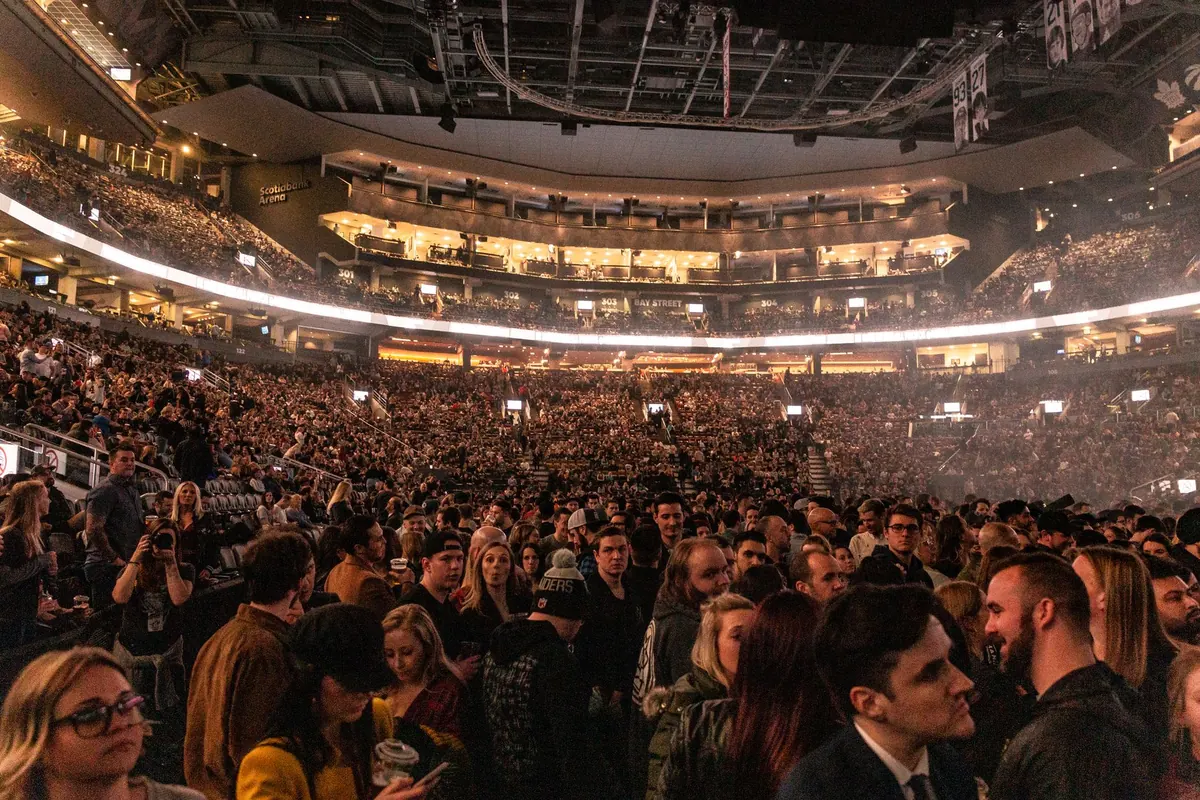
There are two moods in live music. One is standing in a small room above a pub on a wet Tuesday in November, coat over one arm, waiting for a band you've had on repeat to shuffle on stage. The other is sitting on a flattened bin bag in a field in July, shoulders burnt, watching a stage a quarter of a mile away. Neither is the proper way to see a gig. They test different things, and which suits you depends as much on your patience as on your taste.
The room versus the field
Winter gigs are small-room experiences, and small rooms do a lot of the work. Sound bounces off low ceilings and the back wall, so the drums hit you in the chest rather than drifting away. You can see the singer's hands, hear the between-song chatter, spot the moment a band realise a new song is landing. Support acts get a fair hearing instead of being talked over.
A festival swaps all of that for scale. Sound has to cover a field, and wind carries the top end off towards the camping chairs. You won't be close enough to see what pedal the guitarist is using. What you get instead is the thing small rooms can't do: thousands of people singing the same line as the lights come up, and a headline set that feels like an event rather than a night out.
What you're actually paying for
Club shows are, night for night, the cheaper option. You buy one ticket, get yourself there and back, and you're home by midnight. A festival is a package deal, and the ticket is only the first line of it.
- Ticket — the headline cost, usually paid months in advance.
- Travel — often the sneaky one, especially crossing the country.
- Camping gear or accommodation — tent, sleeping bag, or a hotel you'll barely use.
- Food and drink on site — three days of eating out, planned or not.
- The small stuff — sunscreen, spare socks, a battery pack, and the tent peg you'll lose.
Budget for the whole weekend rather than the ticket, and read the terms before paying in instalments — refund policies vary, and it's worth knowing where you stand before you're committed. A winter gig rarely needs that level of planning. That low commitment is part of the appeal: you can decide on Thursday and be there on Friday.
Travel, timing and British weather
Winter
The main risk is transport, not exposure. Check the last train before doors open, not during the encore. If the venue is a twenty-minute walk from the station, work out the route in daylight, because the walk back in the cold feels twice as long. Coat check is worth the small charge; a wet coat draped over a barrier ruins everyone's evening, yours included.
Summer
Festival logistics are mostly about queueing and walking. Sites are bigger than they look on a map, the distance from your tent to the main stage can be a mile, and phone signal tends to collapse once everyone arrives. Pick a meeting point on day one and treat it as law. Layers beat optimism: a waterproof and a warm jumper earn their place in your bag even in a heatwave.
Comfort: three hours versus three days
A gig asks for one evening of endurance. Wear shoes you can stand in, expect the room to get warm once it fills, and dress in layers you can tie round your waist. Festival comfort is a different discipline — less about surviving the set, more about surviving the weekend. Good boots, dry socks, a refillable bottle and some plan for actual sleep will do more for your enjoyment than any lineup announcement.
How the crowd changes everything
Winter crowds are closer and more physical. You get the pit, the shoulder-to-shoulder singalong and the odd intimacy of a room full of strangers who all know the same B-side. You also get the person talking through the quiet song, which is worse in a small room because everyone can hear them.
Festival crowds are looser. More room to dance badly, more casual fans, and a genuinely decent habit of strangers hauling each other out of the mud. The trade-off is distance: at a big stage you're watching a screen as often as a person. If you want to be near the front, you'll stand through two bands you don't know to hold your spot.
A quick way to decide
Answer these honestly and you'll know which one you're buying next:
- Do you want to see the band, or see the show? Small rooms for the first, big fields for the second.
- How do you feel about sleeping in a tent? A hard no is a hard no.
- Can you get home after 11pm without a car?
- Do you want one band you love, or twenty you quite like?
- How much are you willing to spend on a single weekend?
Mostly first answers, you're a gig person. Mostly second, book the festival. If it's a genuine mix, the middle ground is bigger than it looks: day tickets, one-day city festivals, and all-dayers at a venue with three rooms and a decent cloakroom.
Getting the best of both
You don't have to pick a side. Buy the winter ticket on a whim and treat it as the cheap thrill it is. Book the festival with people you've already shared a tent with, or split it: one day on site, one night in a real bed nearby. In both cases, arrive early enough for the support act — that's where next year's favourite band usually comes from. Take earplugs; decent ones let you hear the mix rather than the mush. If you regularly leave shows with ringing ears, speak to your GP or a hearing specialist rather than shrugging it off.
Then judge each night on its own terms. A wet Tuesday in a room of two hundred can beat a headline set in a field, and a field at dusk can beat anything you'll see indoors all year. Show up, stand somewhere sensible, and let the season do the rest.
Photo: Wendy Wei / Pexels