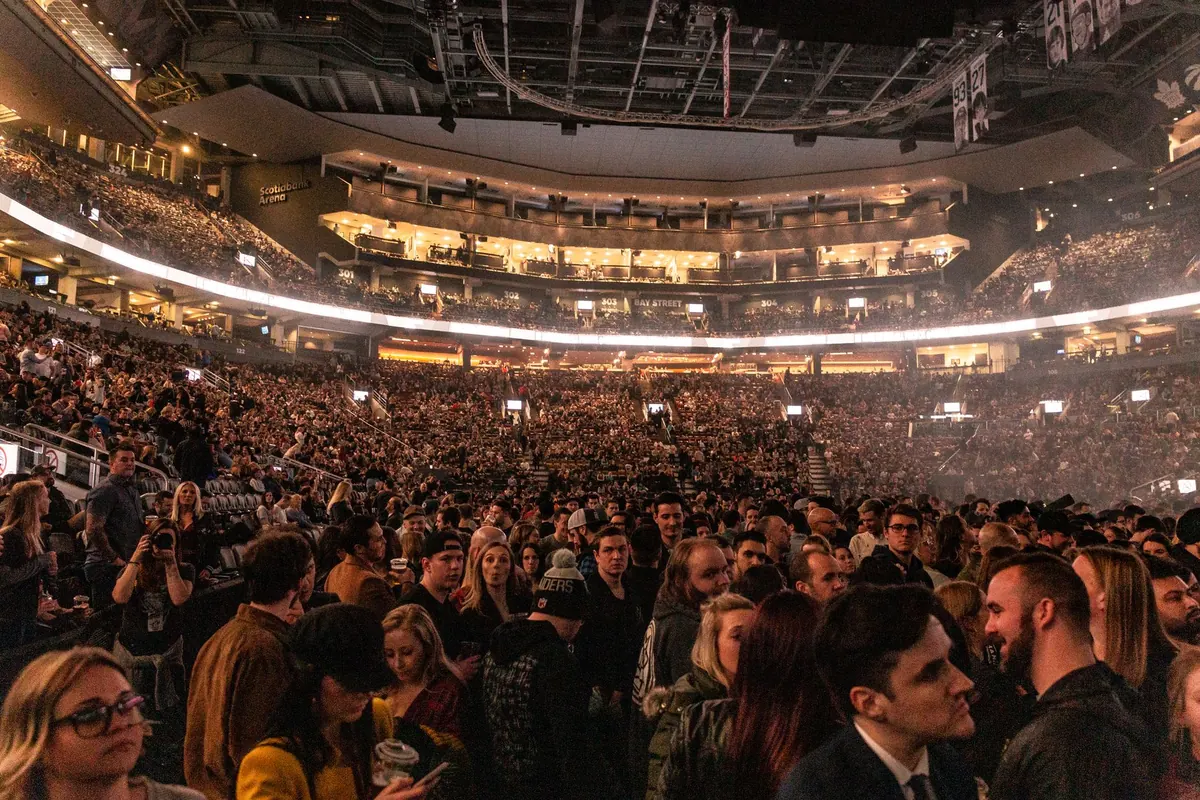
Thirty minutes in a support slot is not a headline set with the fat trimmed off. It's a different shape of thing. Nobody in the room paid to see you, half of them are still drifting in from the smoking area, and the person running the desk has a curfew in mind. That's not a disadvantage so much as a brief — play to it well and you'll pick up more fans in half an hour than some bands manage in a full night.
Here's how to build a setlist that does what a support slot actually needs.
Start With the Clock, Not the Songs
"Thirty minutes" on the poster almost never means thirty minutes of music. Changeover, tuning, applause, the promoter's hand signal — it all comes out of your time. Assume 25 to 27 minutes and be pleasantly surprised.
Time your songs with a stopwatch at rehearsal rather than trusting memory. A song that "feels like three minutes" is often three-forty once the extended outro is added. Then add the gaps: every tuning change, every pause while the singer talks. If the total comes to 31 minutes, cut a song. Nobody has ever complained that a support band finished two minutes early; plenty have watched the house lights come up mid-song.
A useful trick is to time the whole run-through rather than the individual tracks. Play the set start to finish in rehearsal, exactly as you would on stage, with the between-song chat and the tuning and the false start on the second verse. Whatever the stopwatch says at the end is your real number, and it's usually two or three minutes longer than the sum of the songs.
Decide What the First Ninety Seconds Are For
Your first job is to stop the room talking. Most of the audience is waiting for the band they actually came for, and the hum of conversation is your real competition.
Open with the song that lands fastest: a strong vocal, a riff people can grab onto, a tempo that doesn't need warming up. Not the atmospheric intro. Not the new one in an odd time signature. Not the slow one, however proud of it you are. You can be interesting later; first you need to be heard.
Get your band name into the room in the first ten seconds, or straight after the first song. People arrive late. Some of them will want to look you up before you've finished. A flat, unbothered "we're called this, we're from here" between songs one and two does more work than a two-minute monologue nobody asked for.
Build Three Peaks, Not One
An album running order is not a setlist. A good support set has shape: it opens high, dips just enough to let people breathe, then finishes higher than it started. Save something for the last three minutes — that's the bit people remember on the walk home.
A thirty-minute shape that works:
- Opener — your fastest, most immediate three minutes.
- Second song — similar energy, different tempo, so it doesn't sound like a repeat.
- First dip — mid-tempo, big chorus, the one people hum afterwards.
- The quieter one — you've earned their attention now, so spend it.
- Back up — something with a bit of lift in the intro.
- The local favourite — if you have a song people in this town actually know, this is where it goes.
- Closer — your best ending, played tightly, finished cleanly.
That's roughly seven songs. If yours run long, cut to five and play them better. Six tight songs beat eight ragged ones every time.
Notice what the shape is doing: it never asks the audience to concentrate for more than one song at a stretch. The dip after the opener is a rest, not a lull. The quieter song isn't there because you wanted to play it — it's there because you've earned the room's attention and this is the moment to trade volume for something subtler. If the quiet one doesn't hold them, you'll know within twenty seconds, and you can move straight to the lift.
Group Your Tunings and Kill the Dead Air
Tuning breaks are where support sets die. Every silent forty-five seconds of twiddling is forty-five seconds the room spends looking at the bar and deciding whether to go outside. Group songs by tuning so you change once rather than five times, and use a pedal tuner with the mute engaged so nobody hears the process. If you can play the whole set in one tuning, do it.
The same goes for instrument changes and effects. If the guitarist needs to swap guitars, do it during the song the singer is introducing the band, not in silence. If the drummer needs a different snare, that's a rehearsal problem, not a stage problem. Anything that takes longer than ten seconds needs a plan for what the rest of the room is hearing while it happens.
Dead air is not silence. Dead air is the sound of an audience deciding what else they could be doing.
Rehearse the Transitions, Not Just the Songs
Bands rehearse songs and hope the gaps will sort themselves out. They don't. The count-in, the tuning change, the moment between the last chord of one song and the first of the next — that's where a set feels professional or amateur, and it's almost never rehearsed.
Run the set as a continuous piece. Decide in advance what happens after each song finishes: who counts in, whether the singer talks, whether there's a held note under the changeover. Have a default. "We'll just see how we feel" is what produces the awkward forty seconds where nobody is sure who's starting next, and the audience fills that gap by turning to the person beside them.
Know What to Cut Before You're Asked To
At some point the promoter will lean over and tell you the set is being cut by five minutes. It's usually not personal — a band ran over, the doors opened late, the headliner's van broke down. What matters is whether you already know what's coming out.
Before you arrive, decide your cut order: which songs go first if you lose three minutes, and which single song is the one you would never drop. Write it on the setlist. If you're asked to trim, you cut instantly and start on time, and the promoter remembers you as easy to work with. That's worth more than the song you dropped, and it'll be worth more again the next time they're booking a support.
The same logic applies in reverse if you gain time. Have one extra song ready to add at the end, but don't play it unless you're genuinely asked — overshooting is the one mistake a support band doesn't recover from.
End Cleanly and Get Off
No encore. There is no version of a thirty-minute support slot where an encore is correct. You finish the last song, say thank you, name the headliner, and get your gear offstage as quickly as you can. The crowd's last impression of you should be the final chorus still ringing, not the sight of you unplugging a cable and looking around for your jacket.
Pack down as though the next band is already waiting — because they are. Say thank you to the sound engineer on the way past. Then hang around the merch table and talk to anyone who comes over. That's where the half hour you just played turns into something longer.
Photo: dotigabrielf / Pixabay